
In between life moments
Thriving Through it
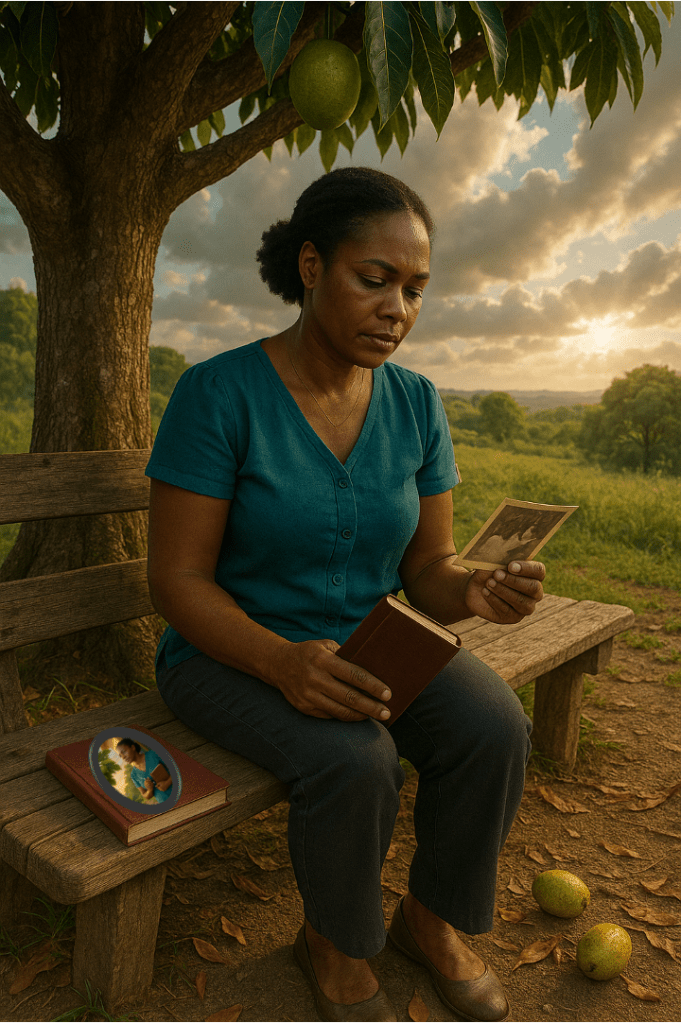
“I wonder what she would’ve said.”
“If I could just replay that last moment…”
“Did I say enough? Did I listen well?”
Death doesn’t just take the person—it haunts the spaces they once filled. Long after the funeral and the final goodbyes, remembrance shows up uninvited. It pulls at our emotional seams and replays old conversations like a highlight reel, only with more ache than clarity.
While memory can be a beautiful gift, it can also become a thief—especially when it robs us of present peace. Choose peace always!
The Double-Edged Sword of Remembrance
In Positive Psychology, memory is linked to meaning-making. We revisit the past to understand our identity and derive purpose. But rumination, the constant turning over of past events, is a different story. It often leads to increased sadness, anxiety, and feelings of helplessness—especially after loss.
According to psychologist Sonja Lyubomirsky, “Rumination traps us in our pain and distracts us from engaging in life now.”
That’s the danger: our hearts become museums of what was, while real life waits untouched outside.
These museums tell tales in unexpected ways. In a somewhat crowded space, an Evangelist studied a woman with eyes brimming with concern, his voice gentle yet piercing as he uttered, “Remembrance is affecting you.” Her shock rippled through the air—raw and palpable—as though the burdens she had carried and concealed so adeptly behind her poised demeanor were suddenly laid bare. In that moment, she understood: healing was not the erasure of the past, nor a veil drawn over yesteryears’ scars. A quiet resolve softened her features, and with a smile that seemed to steady her trembling spirit, she retreated to her seat, the weight of revelation settling into something like grace.
Contentment Interrupted
Scripture offers a counter-cultural rhythm in Philippians 4:11–13. Paul writes:
“I have learned the secret of being content in any and every situation… I can do all this through Christ who gives me strength.”
Paul wasn’t immune to suffering or nostalgia—he’d lost relationships, freedom, and comfort. Yet he leaned into contentment as a discipline, not an accident. His ability to be grounded didn’t come from forgetting the past, but from not allowing it to govern his present.
Reflecting with friends on what the void can do and as we age it is recognized that the permanence of death that is often brushed over with language such as “it will get better with time” is but a curtain so sheer. The duality of remembrance hangs heavy as the Evangelist also has his cross to bear while bearing with others. Isn’t this our daily experience? The helper requires healing from a helper. This brings back childhood games played in Jamiaca like “Tag, you’re it” or game language “Your Turn”
Christian Theology: Time, Memory, and Hope
In the Christian tradition, remembrance is sacred. We remember Christ in Communion. We remember deliverance, mercy, and grace. But biblical remembrance always looks forward, not just backward. It’s tied to hope—what God has done and what He promises still to do.
“This I recall to my mind, therefore I have hope.” – Lamentations 3:21
Remembrance anchored in Christ is different from nostalgia. One feeds peace, the other fuels regret.
It is real and in living colour. It passes us everyday in the form people, places and things. The Evangelist’s hands trembled faintly as he closed the worn Bible, its pages thin as the veil between his sermons and his silence. He had just spoken of resurrection, of hope clawing through tombs—words that once flowed like his mother’s hymns, and his father’s instructions, now ash-thick on his tongue. She had been his first congregation, teaching him to pray with her last breaths: “Even stars burn out, child, but the light lingers.” Yet here he stood, a man split in two—the preacher who traded in miracles, and the son still trapped in the sterile room where her heartbeat had flatlined.
Church is often a place to empty oneself and quite often shame is forgotten like Hannah when we become heavy and need to shed in order to feel alive. It was this woman in the front pew who wept, her grief raw and keening. The Evangelist recognized the sound; it lived in his marrow. “Healing,” he began, then paused. The microphone hissed. His own sermon turned inward: How dare you offer answers when you still scream into the dark? But then—memory. Her voice, frayed but unwavering: “You don’t carry the dead. You carry their love. Let it be enough.”
He straightened, the mic stand groaning under his grip. “Healing,” he repeated, softer now, “is not outrunning the storm. It’s learning to hold your shattered pieces in the same hands that cradle hope.” The room stilled. For a heartbeat, he wasn’t the Evangelist, just a boy clutching his mother… But when he lifted his head, his eyes were twin flames—grief and grit, loss and liturgy.
In solace he remembers, Forward, always forward. He almost smiled. The memory never leaves as captured in the reggae version of Bristol’s “memories don’t leave like people do…”
The Present as Sacred Ground
Jesus taught us to pray, “Give us this day our daily bread.” (Matthew 6:11)
Not yesterday’s leftovers or tomorrow’s anxieties—today’s portion.
So when remembrance stirs, we’re invited to bring it to the Lord:
- To grieve honestly, like Jesus wept at Lazarus’s tomb (John 11:35).
- To hope intentionally, like Abraham who believed God even when he couldn’t see the outcome (Romans 4:18).
- To love presently, like Mary who chose worship in the moment over worry about what was (Luke 10:42).
It is quite difficult to dance between the proverbial rain drops when it’s pouring so hard and shelter is in view but remembrance claws the forward steps. Arise and Live, hope is kindled!
“You are not meant to carry this weight alone. There is One who walks beside you—not only to help you bear the burden, but to give you the space, the grace, and the strength to thrive.
These words from Babbie Mason’s Standing in the Gap echo that sacred promise:
‘Your heart is aching…
My heart is aching too.
Let me help you bear your burden—
That’s the least that I can do.’
This is more than a song. It’s a testament to the God who bends low in our pain and the friends He sends to stand with us. You have both. So let the load be shared. Let your hands be held. And step by step, may you find your footing—not just to endure, but to rise.”
Focus, Reflect and Thrive
Focus
“Forget the former things; do not dwell on the past. See, I am doing a new thing!”
— Isaiah 43:18–19
This is not a call to erase memory—but to reclaim it.
Like the woman who carried her unseen wounds and the Evangelist who preached hope while bearing his own grief, we too are invited to hold our past with open hands. Not as a chain, but as a compass. Not as a weight, but as wisdom.
Every lesson learned, every scar carried, becomes fuel for the next step forward. Because remembrance, when surrendered, is not a prison—it’s an altar.
And Isaiah’s promise pierces through:
“See, I am doing a new thing.”
God does not discard our yesterdays.
He redeems them.
So let the past teach you, but not tether you.
Choose the smile of resilience—
not because the pain is gone, but because Love remains.
And Love lifts.
Reflect
- Is my remembrance rooted in worship or in worry?
The woman in the pew had worn her grief like armor; the Evangelist had worn his like a secret wound. But remembrance, when surrendered, becomes an altar—not a prison. - How might my memories be reshaped if I viewed them through God’s redemptive lens?
His mother’s voice echoed: “You don’t carry the dead. You carry their love.” What if the past wasn’t a weight, but a compass? What dead thing are you carrying from past relationships, be it work, friends or family? - What “daily bread” is God giving me today that I’ve overlooked while longing for yesterday?
The laughter of a friend. The stubborn green of a sprout cracking concrete. The way the mic’s feedback faded when he finally spoke truth instead of platitudes. What did my stagnated thoughts allow me to miss, be it a child’s smile or a family member’s care?
Thrive
To thrive is not to outrun grief, but to let it baptize you into deeper dependence. The Evangelist’s mother had thrived even in dying—her faith a flame that lit his path long after she was gone.
“The pain now is part of the happiness then. That’s the deal.” – C.S. Lewis, A Grief Observed
Thriving means:
- Leaning into the tension between what was and what is—because God is in both.
- Letting memory be a teacher, not a tormentor.
- Finding the “new thing” God is doing, even when it’s hidden in the cracks of the old.
The Evangelist stepped away from the pulpit, his mother… the woman returned to her seat… The past was a shadow, but the light—the light was still ahead. There is HOPE!
Something to Remember
We don’t forget the people we’ve lost or the chapters we’ve lived. But we learn to release their hold on our now. Remembering doesn’t have to be the thief of contentment—it can become the seed of gratitude, the ground for healing, and the lens for seeing God’s goodness in this very moment. Because, as I often say “vullnerability is the soil for growth and maturity”
C.S. Lewis in his book, A Grief Observed left us with these“Her absence is like the sky, spread over everything.” “What pitiable cant to say, ‘She will live forever in my memory!’ Live? That is exactly what she won’t do.”
#ThrivingThroughIt
 Thriving Thursdays With Tanisha
Leave a comment